Time to read: 8 min
What Is Hard Anodizing? Is It Necessary for Wear-Resistant Aluminum Parts?
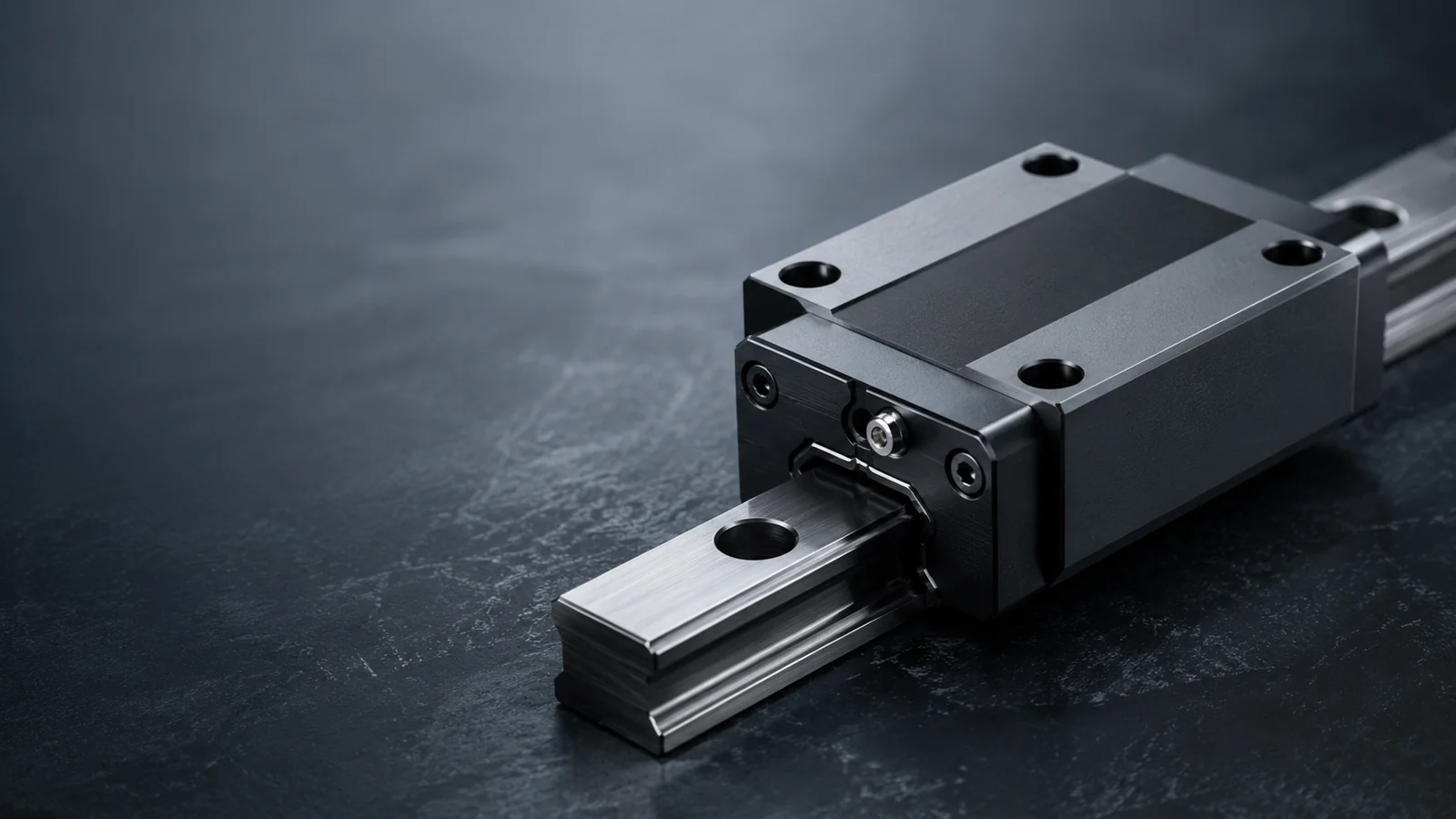
Hard anodizing is widely specified for aluminum CNC parts exposed to sliding, abrasion, repeated contact, and long service cycles. However, a thicker anodic coating is not automatically the best choice for every component. This guide explains when hard anodizing is necessary, how it affects dimensions and assembly, which alloys respond well, and how to specify and inspect it correctly.
Hard anodizing is one of the most common surface treatments specified for aluminum parts that experience sliding, repeated contact, abrasion, or long-term mechanical wear. It is frequently used for CNC-machined components such as guide rails, pneumatic cylinders, robotic joints, valve bodies, actuator housings, fixtures, rollers, and moving equipment parts.
However, hard anodizing is not automatically necessary whenever an aluminum component needs better durability. A thicker coating does not always produce a better part. Hard anodizing changes dimensions, surface texture, electrical conductivity, appearance, edge condition, and sometimes the fit between mating components. It also increases manufacturing cost and may introduce avoidable risks when applied to unsuitable alloys or poorly designed features.
The real engineering question is therefore not simply:
Is hard anodizing wear-resistant?
The more useful question is:
Does this specific aluminum part experience a type of wear that hard anodizing can effectively control?
This guide explains how hard anodizing works, how it differs from conventional anodizing, which aluminum alloys respond well, how coating thickness affects CNC dimensions, when the treatment is necessary, and when another solution may be more appropriate.
Is Hard Anodizing Necessary for Your Aluminum Part?
Hard anodizing is generally selected for functional performance rather than appearance. Before specifying it, engineers should identify the actual failure mechanism that the surface treatment is expected to prevent.
When Hard Anodizing Is Usually Recommended
Hard anodizing should be considered when an aluminum surface is exposed to:
- Repeated sliding against another component
- Abrasive particles, dust, chips, or contaminants
- Frequent assembly and disassembly
- Contact with seals, rollers, bushings, or guides
- Mechanical rubbing caused by moving equipment
- Localized wear around locating or mounting features
- Long service cycles with limited maintenance
- A requirement for a hard, electrically insulating surface
Examples include an aluminum piston moving inside a cylinder, a robotic arm joint repeatedly rotating around a bushing, or a guide block sliding along a rail.
The Aluminum Anodizers Council explains that anodic oxide is substantially harder than the underlying aluminum and that hardcoat anodizing is used on components such as pistons to extend service life.
When Standard Anodizing May Be Enough
Type II sulfuric acid anodizing may be sufficient when the primary goals are:
- Moderate corrosion protection
- Decorative color
- Improved appearance
- Light handling resistance
- Protection against occasional scratches
- Identification of different component groups
- A relatively thin coating with limited dimensional effect
For a control panel, consumer housing, instrument cover, or lightly handled bracket, conventional anodizing may offer adequate performance without the additional thickness and cost of hard anodizing.
When Hard Anodizing Will Not Solve the Problem
Hard anodizing cannot compensate for every design or material problem. It may not solve premature failure caused by:
- Excessive contact pressure
- Poor alignment between mating parts
- Impact loading at sharp edges
- An undersized bearing surface
- A soft substrate deforming below the coating
- Lack of lubrication
- Embedded abrasive particles
- Incorrect clearances
- Galvanic corrosion between dissimilar materials
- Severe fatigue loading
The coating can protect the surface, but the underlying aluminum still carries the structural load. If the substrate bends, dents, or plastically deforms, the harder but relatively brittle oxide layer may crack or chip.
| Part condition | Is hard anodizing usually necessary? | Main consideration |
|---|---|---|
| Decorative enclosure | Usually no | Type II anodizing may be sufficient |
| Sliding guide component | Often yes | Repeated friction and abrasion |
| Precision press-fit housing | Possibly | Coating growth must be controlled |
| Electrical grounding component | Only selectively | Contact areas may need masking |
| High-impact aluminum part | Not always | Coating may crack if the substrate deforms |
| Corrosive but non-wearing component | Depends | Sealed anodizing or another coating may be better |
| Robotic pivot or actuator part | Often yes | Repeated motion and contact |
| Food-contact or medical component | Application-dependent | Finish chemistry and validation are important |
What Is Hard Anodizing?
Hard anodizing, also called hardcoat anodizing or hard anodic oxidation, is an electrochemical process that converts the outer surface of aluminum into a thick aluminum oxide layer.
Unlike paint or plating, the anodic coating is not simply deposited on top of the component. Part of the oxide grows outward from the original surface, while another part forms inward by converting the aluminum substrate.
Hard Anodizing Is an Aluminum Conversion Process
During anodizing, the aluminum component becomes the anode in an electrolytic cell. Electrical current causes the aluminum surface to react with oxygen and form a controlled aluminum oxide structure.
This distinction is important because the oxide layer:
- Is strongly integrated with the aluminum substrate
- Cannot peel in the same way as an improperly bonded paint film
- Has significantly different properties from bare aluminum
- Changes the dimensions of the original part
- Contains microscopic pores that may be sealed, impregnated, or left unsealed
The exact coating properties depend on the aluminum alloy, electrolyte, bath temperature, current density, processing time, pretreatment, and sealing method.
Hard Anodizing and Type III Anodizing
In specifications based on MIL-PRF-8625, hard anodizing is commonly identified as Type III anodic coating. MIL-PRF-8625 covers electrolytically formed anodic coatings on aluminum and aluminum alloys for non-architectural applications.
International projects may instead reference ISO 10074, which specifies requirements and test methods for hard anodic oxidation coatings on aluminum and its alloys.
“Hard anodizing,” “hardcoat anodizing,” and “Type III anodizing” are often used interchangeably in commercial manufacturing. Nevertheless, the drawing should state the required standard and performance rather than relying only on the treatment name.
Hard Anodizing Is Not the Same as Black Anodizing
A black appearance does not prove that a part has been hard anodized.
Black anodizing often refers to Type II anodizing followed by black dyeing. Its main purposes may include appearance, identification, moderate corrosion resistance, and light surface protection.
Hard anodizing is selected primarily for:
- Higher coating thickness
- Better abrasion resistance
- Greater surface hardness
- Functional durability
- Engineering performance
A hard-anodized coating may appear gray, dark gray, bronze, brown, or nearly black depending on the alloy, thickness, process, and dyeing conditions. Some hard-anodized parts can be dyed black, but hard anodizing and black anodizing are not synonymous.
How Does Hard Anodizing Improve Wear Resistance?
Wear resistance is not created by thickness alone. It results from the structure and properties of the aluminum oxide layer, together with the condition of the substrate and mating surface.
A Harder Surface Reduces Abrasive Damage
Bare aluminum is relatively soft and can be scratched or worn by steel fasteners, particles, seals, tools, and repeated contact. Hard anodizing transforms the exposed surface into a much harder oxide.
Hardcoat anodized coatings commonly reach high surface hardness and provide strong abrasion resistance in rubbing and sliding applications.
Hardness values should still be interpreted carefully. The coating is thin compared with the complete component, and measured hardness does not independently predict service life. Coating thickness, porosity, substrate alloy, contact pressure, counterface material, lubrication, contamination, and surface finish all affect wear.
The Oxide Layer Protects the Softer Aluminum Substrate
When a moving component contacts untreated aluminum, the softer surface can gradually deform, smear, gall, or lose material. Hard anodizing places a harder barrier between the aluminum and the contacting object.
This can help maintain:
- Guide dimensions
- Bearing surfaces
- Seal contact areas
- Sliding interfaces
- Locating features
- Repeated assembly surfaces
- Internal cylinder surfaces
However, the coating must remain supported by the aluminum beneath it. Heavy impact or concentrated loading can deform the substrate and fracture the oxide even when the coating itself is hard.
Friction and Wear Are Not the Same Property
A harder coating may reduce wear without automatically producing the lowest coefficient of friction.
For dry sliding systems, additional measures may be needed, such as:
- PTFE impregnation
- Dry-film lubricant
- Grease or oil
- A compatible polymer bushing
- Improved surface finishing
- Lower contact pressure
- A different mating material
Hard anodizing can improve durability, but the complete tribological system must be evaluated. A rough hard-anodized surface running dry against a soft polymer may damage the polymer even though the aluminum coating remains intact.
How Is Hard Anodizing Different from Standard Anodizing?
The most practical differences involve coating thickness, wear performance, appearance, dimensional influence, and cost.
Hard Anodizing Uses More Demanding Process Conditions
Hard anodizing is generally performed using tightly controlled electrolyte temperatures and higher current densities than conventional sulfuric acid anodizing. The objective is to grow a thicker and more wear-resistant oxide while limiting excessive dissolution of the coating during processing.
Maintaining uniform current distribution is particularly important for:
- Deep holes
- Internal cavities
- Thin walls
- Sharp corners
- Large flat surfaces
- Mixed cross-sections
- Parts with poor electrical contact areas
Inconsistent racking or current flow can produce local thickness variation, burning, incomplete coating, or color differences.
Hard Anodizing Is Normally Thicker
Hardcoat coatings are normally substantially thicker than conventional anodic coatings. Many wear-resistant applications use coating thicknesses around 40 to 60 micrometers, although the correct value depends on the part, alloy, standard, dimensional tolerance, and service environment.
This does not mean every wear-resistant component needs a 50-micrometer coating. The required thickness should be determined by service conditions, alloy response, dimensional tolerance, and the applicable specification.
Hard Anodizing Prioritizes Function Over Uniform Color
Conventional dyed anodizing is often selected when consistent color is a major requirement. Hard anodizing is more sensitive to:
- Alloy composition
- Material temper
- Coating thickness
- Heat treatment
- Surface preparation
- Batch differences
- Local current density
Therefore, two components with the same nominal black hard-anodized finish may not look identical if their aluminum comes from different alloy batches or suppliers.
| Characteristic | Standard Type II anodizing | Hard Type III anodizing |
|---|---|---|
| Primary purpose | Appearance and general protection | Wear and functional performance |
| Typical coating thickness | Relatively thin | Substantially thicker |
| Abrasion resistance | Moderate | High |
| Dimensional effect | Lower | More significant |
| Color consistency | Generally easier to control | More alloy- and thickness-dependent |
| Common applications | Covers, panels, housings, brackets | Pistons, guides, rollers, joints, cylinders |
| Cost | Lower | Higher |
| Tight-fit design risk | Moderate | Higher |
| Surface electrical conductivity | Insulating oxide | Insulating oxide |
| Need for machining allowance | Sometimes | Frequently |
How Does Hard Anodizing Affect CNC Part Dimensions?
Dimensional change is one of the most important differences between hard anodizing and cosmetic surface treatment. Ignoring it can cause threads to bind, holes to become undersized, shafts to become oversized, and assemblies to fail.
Part of the Coating Grows Above the Original Surface
Hard anodizing usually produces a dimensional increase on each treated surface equal to approximately half of the total coating thickness.
For example, assume a drawing specifies a 50-micrometer hard-anodized coating:
- Approximately 25 micrometers may build outward from each coated surface.
- A coated external diameter may increase by about 50 micrometers overall.
- A coated internal diameter may decrease by about 50 micrometers overall.
These values are useful for preliminary design but should not replace the coating supplier’s process capability data.
Holes, Threads, and Fits Require Special Attention
Features commonly affected by hard anodizing include:
- Precision bores
- Bearing seats
- Dowel holes
- Reamed holes
- Internal and external threads
- O-ring grooves
- Seal diameters
- Press-fit features
- Sliding slots
- Mating faces
- Datum surfaces
A hard-anodized threaded hole may become difficult to assemble if the thread was machined to its finished metal dimension before coating. The coating also forms on the thread flanks, changing the effective pitch diameter.
Possible solutions include:
- Machining additional allowance before anodizing
- Masking the thread
- Chasing the thread after anodizing
- Using thread inserts
- Changing the tolerance class
- Applying hard anodizing only to functional wear surfaces
Post-anodizing machining must be evaluated carefully because cutting through the coating exposes bare aluminum.
Coating Thickness Must Be Included in the Tolerance Stack
The designer should distinguish among:
- The dimension before coating
- The expected coating build-up
- The required final dimension after coating
A vague note such as “hard anodize all over” is inadequate for a precision assembly.
| Feature | Typical hard-anodizing risk | Common design response |
|---|---|---|
| External shaft diameter | Diameter becomes larger | Machine undersize before coating |
| Precision internal bore | Bore becomes smaller | Machine oversize or mask |
| Internal thread | Pitch diameter decreases | Mask, oversize, or chase carefully |
| External thread | Pitch diameter increases | Mask or compensate before coating |
| Press-fit seat | Interference becomes excessive | Specify final coated dimension |
| O-ring groove | Groove width or depth changes | Include coating in seal calculations |
| Grounding pad | Electrical contact is lost | Mask the contact area |
| Sharp edge | Coating may become weak or chip | Add a radius or controlled edge break |
| Blind hole | Entrapped chemistry or uneven coating | Add drainage and clarify masking |
| Datum surface | Inspection reference changes | Define whether datum applies before or after coating |
Which Aluminum Alloys Are Suitable for Hard Anodizing?
Most commonly machined aluminum alloys can be hard anodized, but they do not all produce the same coating quality, color, hardness, or wear resistance.
6000-Series Aluminum Is a Common Choice
Aluminum 6061 and 6082 are frequently selected for hard-anodized CNC parts because they combine:
- Good machinability
- Useful mechanical strength
- Broad availability
- Relatively predictable anodizing response
- Reasonable coating uniformity
- Competitive material cost
They are widely used for automation equipment, optical structures, robotic components, fixtures, housings, valve bodies, and machine parts.
For many projects, 6061-T6 offers a practical balance between substrate strength, machining cost, and hard-anodizing performance.
High-Strength Alloys Need More Process Control
Aluminum 7075 may be selected when the component requires higher mechanical strength than 6061. It can be hard anodized, but its alloying content can affect:
- Final color
- Coating uniformity
- Corrosion behavior
- Edge condition
- Surface appearance
Aluminum 2024 also requires careful process selection because of its copper content. The treatment should be qualified according to the actual alloy, geometry, thickness requirement, and service environment rather than transferred directly from a 6061 process.
Cast Aluminum Can Produce More Variable Results
Cast aluminum alloys may contain substantial silicon, copper, porosity, and intermetallic particles. These characteristics can lead to:
- Dark or uneven color
- Reduced visual uniformity
- Rougher coating texture
- Local coating variation
- Visible casting defects after pretreatment
- Lower consistency between batches
Hard anodizing may still be suitable for a cast part when functional wear resistance is the priority, but appearance expectations should be realistic.
| Aluminum alloy | General hard-anodizing suitability | Common considerations |
|---|---|---|
| 6061 | Very common | Balanced machining and coating response |
| 6082 | Common | Similar functional use to 6061 |
| 7075 | Suitable with control | High strength; color and coating response may vary |
| 2024 | Application-dependent | Copper content requires careful process control |
| 5052 | Generally suitable | Good corrosion behavior; lower structural strength |
| 5083 | Generally suitable | Useful for marine-related parts; verify dimensional needs |
| Cast Al-Si alloys | Variable | Silicon and porosity affect appearance and texture |
| Unknown aluminum grade | Not recommended | Coating results cannot be reliably predicted |
What Design Features Can Cause Hard-Anodizing Problems?
The coating supplier cannot correct every issue created by the part geometry. Good results begin with CNC part design.
Sharp Edges Can Produce Weak Coating Conditions
Electrical current tends to concentrate around sharp edges and corners. A perfectly sharp machined edge may develop an irregular coating condition and become more vulnerable to chipping during handling or assembly.
Where the product function allows, designers should consider:
- A small edge break
- A controlled chamfer
- A specified corner radius
- Avoiding knife-edge features
- Avoiding extremely thin projections
The exact radius should match the component scale and functional requirement. It should not be added blindly to sealing edges, locating edges, or optical interfaces.
Deep Recesses May Receive Less Uniform Coating
Hard anodizing depends on current distribution and electrolyte access. The coating may be more difficult to control inside:
- Deep blind holes
- Narrow slots
- Long internal passages
- Small intersecting holes
- Enclosed pockets
- Features far from the cathode
- Areas shielded by complex geometry
If the internal surface is a critical wear interface, this should be identified on the drawing and discussed before production.
Racking Contact Leaves Uncoated Areas
The anodizing process requires electrical contact between the component and the rack. The contact point cannot be fully anodized because current must enter the part through that location.
The drawing or finishing instructions should identify acceptable rack locations, especially when:
- Every visible surface is cosmetic
- The part contains sealing surfaces
- Only one face is hidden after assembly
- The component has limited nonfunctional areas
- Rack marks could interfere with mating parts
A coating requirement that demands perfect coverage on every surface without allowing an electrical contact location may not be manufacturable.
What Are the Limitations of Hard Anodizing?
Hard anodizing is valuable, but it should not be treated as a universal wear solution.
The Coating Is Hard but Relatively Brittle
The oxide layer does not deform as easily as the aluminum substrate. Under impact, bending, or concentrated loading, the underlying aluminum may move while the coating cannot follow the deformation.
Possible results include:
- Microcracking
- Edge chipping
- Local coating fracture
- Exposure of bare aluminum
- Progressive wear around the damaged region
For shock-loaded components, the designer should review substrate strength, wall thickness, contact geometry, and load distribution instead of relying only on surface hardness.
Maximum Hardness and Maximum Corrosion Protection May Require Different Finishing Decisions
Hard-anodized coatings contain pores. Sealing can improve corrosion protection by closing or modifying these pores, but the chosen sealing treatment may influence hardness, wear behavior, friction, dye retention, and dimensions.
The correct finishing route depends on whether the main priority is:
- Dry abrasion resistance
- Corrosion resistance
- Lubricity
- Color
- Electrical insulation
- Chemical resistance
- Food-contact requirements
- Dimensional stability
The drawing should therefore state whether sealing or impregnation is required rather than leaving this decision undefined.
Hard Anodizing Does Not Make Aluminum Electrically Conductive
Aluminum oxide is electrically insulating. Hard anodizing can interrupt grounding paths, electrical contacts, and EMI bonding surfaces.
Areas that may require masking include:
- Grounding pads
- Connector seats
- Threaded electrical contacts
- Busbar interfaces
- Chassis bonding locations
- Conductive mounting faces
Masking requirements should be defined before quoting because selective anodizing increases process complexity and inspection needs.
Which Wear-Resistant Parts Benefit Most from Hard Anodizing?
Hard anodizing offers the most value when its properties match the actual contact condition.
Sliding and Reciprocating Components
Parts involving repeated linear or reciprocating motion are common candidates, including:
- Pneumatic cylinder bores
- Piston components
- Guide blocks
- Slide plates
- Linear actuator housings
- Valve spools and bodies
- Seal-running surfaces
- Packaging equipment guides
The coating can help reduce gradual material loss and preserve functional dimensions over repeated cycles.
Robotic and Automation Components
Robotic and automated systems often combine lightweight aluminum structures with repeated movement. Suitable components may include:
- Robot arm pivots
- End-effector components
- Gripper bodies
- Rotary actuator housings
- Alignment fixtures
- Sensor mounts
- Shuttle components
- Pick-and-place equipment parts
Hard anodizing is most useful on local wear surfaces rather than automatically on every aluminum component in the assembly.
Automotive, Aerospace, Optical, and Equipment Parts
Potential applications include:
- Suspension adjustment components
- Seat mechanisms
- Pump and compressor parts
- Aircraft interior mechanisms
- Aerospace actuator components
- Optical positioning stages
- Camera support components
- Laboratory instrument mechanisms
- Textile machinery parts
- Semiconductor handling equipment
| Application | Primary risk | Is hard anodizing a strong candidate? |
|---|---|---|
| Pneumatic cylinder bore | Seal and piston wear | Yes |
| Robotic pivot housing | Repeated rotational contact | Yes |
| Optical positioning stage | Sliding wear and dimensional stability | Often |
| Decorative electronics housing | Handling scratches | Usually not necessary |
| Aluminum grounding bracket | Loss of conductivity | Only with selective masking |
| High-impact lever | Substrate deformation | Evaluate carefully |
| Food packaging guide | Repeated sliding | Often, subject to compliance requirements |
| Static mounting plate | Minimal wear | Usually unnecessary |
| Valve body with moving spool | Friction and dimensional wear | Often |
| One-time prototype enclosure | Limited service exposure | Usually no |
How Should Hard-Anodized Parts Be Tested?
Inspection should be based on the functional requirements of the part. A dark surface alone does not confirm that the coating meets the specification.
Coating Thickness Measurement
Thickness inspection is especially important for precision components because it affects both performance and final dimensions.
Common inspection methods may include:
- Eddy-current thickness measurement
- Cross-sectional measurement for qualification
- Process coupons
- Microscopic evaluation
- Supplier-certified coating reports
Measurement locations should be defined when uniformity is critical. A reading taken on an accessible flat exterior may not represent coating thickness inside a deep bore or narrow slot.
Abrasion and Wear Testing
When wear performance is critical, the project may require an abrasion test instead of relying only on coating thickness.
ISO 8251 describes abrasion test methods for anodic oxidation coatings, while ASTM B1023 provides a test method for evaluating the abrasion resistance of hard anodic coatings.
The test method should reflect the specification or customer requirement. A generic hardness value does not necessarily represent actual sliding wear in the final assembly.
Dimensional and Visual Inspection
After hard anodizing, critical dimensions should be checked in their finished condition. Inspection may include:
- Bore diameter
- Shaft diameter
- Thread fit
- Flatness
- Groove width
- Position of masked boundaries
- Coating coverage
- Burning or discoloration
- Rack marks
- Chipping
- Powdery surfaces
- Pitting
- Uneven appearance
Corrosion testing, seal-quality testing, electrical insulation testing, or adhesion-related evaluation may also be required depending on the application and standard.
How Should Hard Anodizing Be Specified on a CNC Drawing?
A clear drawing note reduces misunderstanding between the designer, machining supplier, anodizing supplier, and inspection team.
Identify the Coating Standard and Type
A drawing should not state only:
Hard anodize, black.
A more complete note may identify:
- Hard anodize or Type III
- Applicable standard
- Required coating thickness or range
- Class or dye requirement
- Sealing or impregnation requirement
- Masking locations
- Final dimensional requirements
- Rack-contact limitations
- Required inspection documentation
An example might read:
Hard anodize per MIL-PRF-8625, Type III, Class 1, coating thickness 40–50 μm. Mask identified threads, bearing bore, and electrical grounding surface. Critical dimensions apply after coating.
The exact wording must match the actual application and customer specification.
Define Selective Coating and Masking Areas
Masking should be shown using:
- Drawing callouts
- Surface symbols
- Section views
- Color-coded reference drawings
- Clearly defined boundary dimensions
Avoid instructions such as “mask where necessary.” The finishing supplier may not understand which surfaces control grounding, sealing, assembly, or alignment.
State Whether Dimensions Apply Before or After Coating
For every coating-sensitive feature, the drawing should clarify whether the tolerance applies:
- Before anodizing
- After anodizing
- After final finishing
- On the metal substrate
- On the coated surface
This is especially important when the machining supplier and anodizing supplier are separate companies.
How Does RapidMFGPro Support Hard-Anodized CNC Part Projects?
Hard-anodized components require coordination between material selection, CNC machining, finishing, and inspection. Treating these as unrelated purchasing steps increases the risk of dimensional and coating problems.
RapidMFGPro operates as a manufacturing resource and supplier-matching platform. Rather than presenting hard anodizing as an isolated catalogue option, the project can be reviewed according to the complete part requirement.
Reviewing the Drawing Before Supplier Matching
The review may identify risks involving:
- Critical post-coating dimensions
- Precision holes and threads
- Required masking
- Sharp edges
- Deep internal features
- Alloy suitability
- Surface-finish requirements
- Electrical contact areas
- Cosmetic expectations
- Testing and documentation
This helps determine whether hard anodizing is necessary and whether the part should be redesigned or dimensionally compensated before machining.
Matching Machining and Finishing Capabilities
A capable CNC supplier must understand how the final coating affects the machined geometry. The anodizing resource must also be able to control coating thickness, masking, racking, sealing, and inspection for the selected alloy.
RapidMFGPro can help match a project with resources suited to factors such as:
- Prototype or production quantity
- Part size
- Aluminum alloy
- CNC milling or turning complexity
- Hard-anodizing specification
- Required coating thickness
- Tight final tolerances
- Industry documentation
- Inspection requirements
- Geographic or delivery needs
The objective is not merely to find a supplier that lists “hard anodizing,” but to identify a manufacturing route that can maintain the required dimensions and functional surfaces.
Coordinating Prototype Validation and Production
For demanding wear-resistant components, an initial sample or low-volume batch can be used to verify:
- Final coated dimensions
- Thread assembly
- Masking accuracy
- Coating appearance
- Surface texture
- Wear behavior
- Mating-component fit
- Inspection methods
The validated machining and finishing conditions can then be carried into production with clearer acceptance criteria.
Frequently Asked Questions About Hard Anodizing
Is Hard Anodizing More Wear-Resistant Than Regular Anodizing?
Yes. Hard anodizing generally produces a thicker, harder, and more abrasion-resistant oxide layer than standard Type II anodizing. It is therefore more appropriate for sliding, rubbing, and repeated-contact surfaces.
However, actual wear life also depends on the aluminum alloy, coating thickness, substrate strength, counterface, contact pressure, lubrication, contamination, and surface finish.
Does Hard Anodizing Make Aluminum as Strong as Steel?
No. Hard anodizing changes the surface properties of aluminum but does not transform the entire part into a steel-like material.
The surface may achieve high hardness and wear resistance, while the component core retains the strength, stiffness, and deformation behavior of the selected aluminum alloy.
Can Hard-Anodized Parts Be Black?
Yes. Some hard-anodized coatings can be dyed or processed to obtain a dark appearance. Nevertheless, color can vary by alloy, coating thickness, material batch, and processing conditions.
A functional hard-anodizing requirement should not use visual blackness as the only acceptance criterion.
Can Threads Be Hard Anodized?
Threads can be anodized, but the oxide changes their effective dimensions. Internal threads become tighter, while external threads become larger.
Depending on the assembly requirement, threads may need dimensional compensation, masking, post-process chasing, or inserts.
Is Sealing Always Required After Hard Anodizing?
No. The sealing decision depends on the required balance among wear resistance, corrosion resistance, lubricity, color, and environmental exposure.
The sealing or impregnation requirement should be specified rather than assumed.
Does Hard Anodizing Prevent All Scratches?
No coating is completely scratch-proof. Hard anodizing significantly improves resistance to abrasion and handling damage, but sharp tools, hard particles, high contact pressure, impact, or coating fracture can still damage the surface.
Can a Hard-Anodized Surface Be Machined Again?
It can be ground, honed, lapped, or machined using suitable tooling and process control, but removing the oxide exposes the aluminum underneath.
Post-coating machining should therefore be planned only when required and reflected in the drawing and inspection plan.
Is Hard Anodizing Worth the Additional Cost?
It is worth the cost when surface wear would otherwise shorten part life, change functional clearances, generate debris, damage seals, or cause equipment downtime.
It may not be cost-effective for decorative, static, lightly handled, or short-life components that do not experience meaningful wear.
Conclusion
Hard anodizing is an effective treatment for aluminum parts exposed to abrasion, sliding, rubbing, and repeated mechanical contact. Its harder and thicker oxide layer can extend service life and preserve functional surfaces, but it also changes dimensions, color, surface conductivity, and assembly clearances.
It should be selected according to the actual wear mechanism rather than added automatically to every aluminum component. Alloy selection, coating thickness, edge design, masking, sealing, and post-coating inspection must be considered before machining begins.
For precision CNC projects, the best result comes from coordinating the machining and anodizing requirements as one manufacturing plan. RapidMFGPro helps review these requirements and match projects with suitable machining and finishing resources.
Reference Sources
Need Help Reviewing a Custom Part?
Share your CAD file and requirements to request supplier matching. Supplier capability and commercial terms must be verified before order placement.
Request Supplier Match